150+ Hours AI Based Digital Marketing Course in Kolkata with Practical Training 25+ Modules , 12+ Certifications & Placement Support

Join For an Exciting Journey to Growth on AI , Digital Marketing , Lead Generation , Analytics , Content Marketing with
Sourav Karmakar , A Symbiosis Alumni with 8+ Years Expericence
150+ Hrs Training
Live Website Creation and Design
Learning and applying SEO strategies in real-time.
Practical experience in running live campaigns.
Training by a SYMBIOSIS alumni with over 8 years of experience
Ongoing support and guidance in job placement
Access to online recorded content for future reference
classroom and online learning*
Query Resolution: Support during and after the course
Option to revise the entire course or specific parts multiple times.
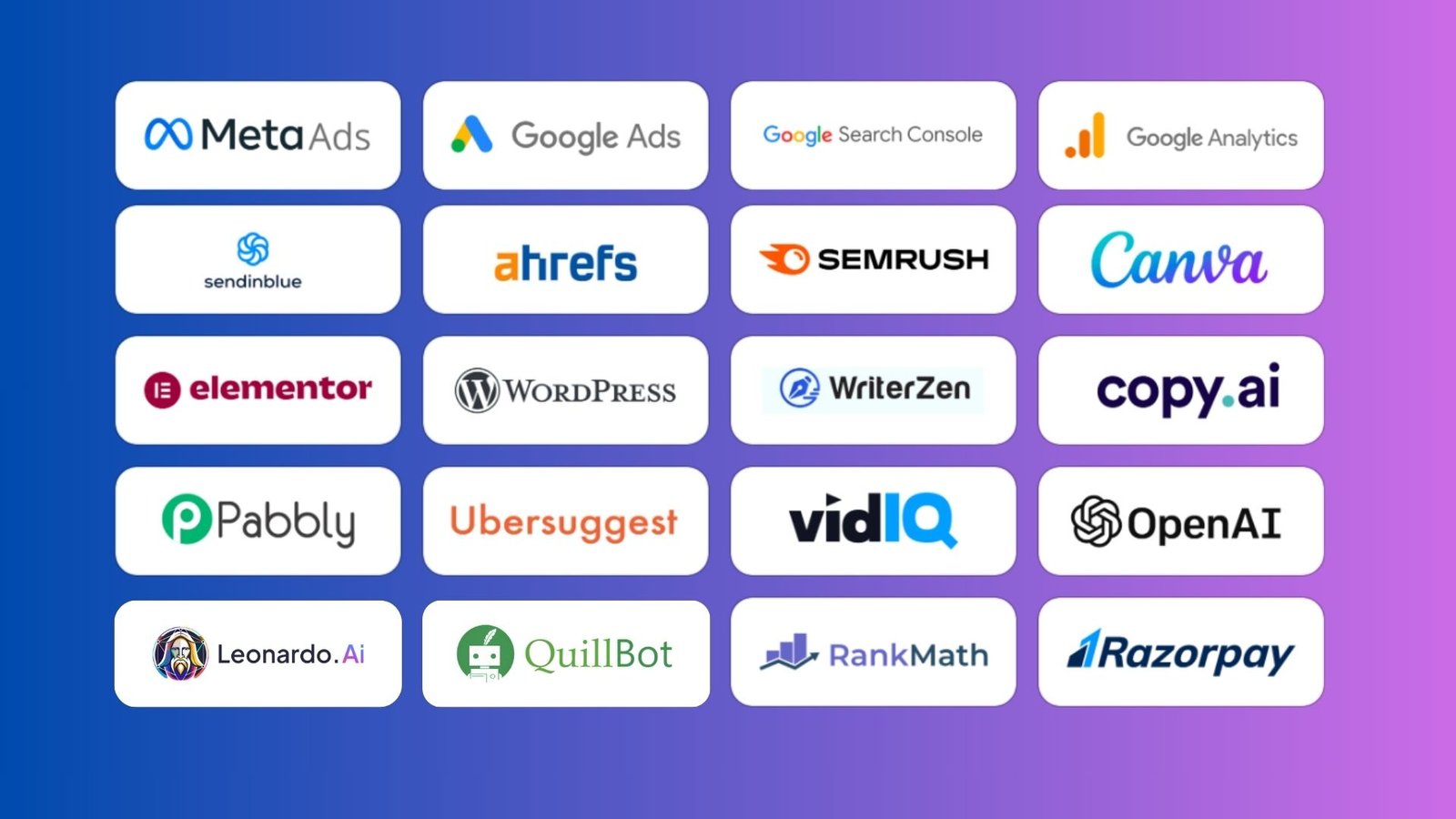
Access to premium AI tools
12+ Certifications
Access to 200+ Interview questions
Regular Assessment Tests for filling knowledge gaps
Easy Installation payments
On demand One on One support
Mock Interviews for Job preparation
support upto 2 years till placement
Learn some new age AI tools
Why Digital Marketing Course
One of the biggest Digital Marketing Course Benefits is the endless career opportunities it opens up. Every business today needs skilled marketers to grow online, meaning your skills will always be in demand. Whether you dream of working for a top agency, building your own brand, or freelancing on your terms, learning digital marketing gives you the flexibility and confidence to choose your path. The digital world isn’t slowing down—and with the right course, you’ll be prepared to step into high-paying, creative roles that let you make an impact from day one.
A major Digital Marketing Course Benefit is learning skills that deliver real, measurable results. You’ll understand how SEO, social media, content, and ads work together to attract and convert customers. Unlike traditional degrees, digital marketing training focuses on hands-on projects—so you learn by doing, not just reading. You’ll be able to manage campaigns, run analytics, and even grow your own online presence right away. This practical, job-ready knowledge makes you stand out and shows employers or clients that you know how to get real results in the digital world.
When it comes to smart career investments, the Digital Marketing Course Benefits are hard to ignore. You don’t need years of college or huge tuition fees to build a profitable career. Most digital marketing courses are affordable, short-term, and focus on the latest industry tools. Once you’re skilled, your earning potential grows fast—whether you work for a company, manage freelance projects, or build your own brand. In short, you invest a little time and money now to unlock financial growth and career security for years to come.
One of the lesser-known Digital Marketing Course Benefits is the power it gives you to build your personal brand. You’ll learn how to create an online presence that reflects your skills, values, and passions—something employers and clients look for today. By mastering content creation, SEO, and social media marketing, you can attract attention, build authority, and grow your influence naturally. Whether you’re a student, entrepreneur, or working professional, knowing how to market yourself online sets you apart and helps you create new opportunities you might never have imagined.
In today’s digital age, staying updated is essential—and that’s where the Digital Marketing Course Benefits truly shine. Technology and consumer behavior change fast, and businesses need people who understand modern marketing tools and trends. A quality course keeps you ahead of the curve, teaching you how to adapt, experiment, and grow with the industry. You’ll always have relevant skills that make you valuable, no matter how much the market evolves. Learning digital marketing is not just a course—it’s your ticket to future-proofing your career.
If you dream of working for yourself, the Digital Marketing Course Benefits are game-changing. You’ll learn how to find clients, run campaigns, and promote products online—all skills that fuel entrepreneurship. Whether you want to start a small business, sell your own products, or work remotely with international clients, digital marketing gives you the tools to do it confidently. It’s a skill that combines creativity, strategy, and independence—empowering you to turn your ideas into income and build a lifestyle that truly fits your goals.
Advanced Digital Marketing Course Curriculum
Basics of Marketing
1. What is Marketing?
2. 4 P’s of Marketing .
3. Types of Online Business and their Objectives.
4. Difference between Leads & Sales.
5. Definitions of Branding, Marketing, Advertising, Promotions and Sales.
6. Market Segmentation, Targeting and Positioning. (STP).
7. Real World Case Studies & Examples.
Introduction to Marketing
8. What is Digital Marketing?
9. Types of Digital Marketing?
10. Digital Marketing Vs Traditional Marketing
11. Traditional Marketing Funnel
13. Digital Marketing Funnel
14. Brand/Product Visibility
15. What is CTR & How is it calculated?
16. What is Traffic?
17. Types of Traffic based on source
18. Types of Traffic based on Audience
19. Difference between targeted traffic & non-targeted traffic
20. What is the bounce rate? How to decrease bounce rate?
21. Tips to increase visitor engagement
22. How to convert Traffic into Leads or Sales.
World of Web & Importance of website in Digital Marketing
23. What is a web Browser? & types of browsers
24. Difference between browsers and Search Engines.
25. What is a web page?
26. What is a website
27. What do you need to create a website?
28. What are Domain names?
29. What are Domain extensions?
30. How to choose a domain name for your website?
31. How to buy a domain name?
32. What is a hosting space/server?
33. Different types of hostings
34. Which type of hosting to buy?
35. How to choose the best hosting provider
36.Buying Hosting online
Introduction to AI Marketing [Prompt Engineering + Generative AI LLMS + AI Driven Marketing]
37. What is AI Marketing?
38. What is Generative AI?
39. Difference Between AI & Generative AI
40. What are LLMS
41. What is a prompt
42. What is a Token
43. Prompts Vs Token Vs Outputs
44.Best AI Tools 2025 – [10+ Tools Covered]
45.Basics of Prompt Engineering
46. Different Types of Prompts
47. What are Negative Prompts and its Importance?
48. How to do Research with AI Tools
49. How to Create text content with these AI Tools
50. How to Create Images with AI Tools
51. How to create videos with AI tools
52. 100+ Prompt Templates – Prompt Library for AI Marketing
Passive Income Methods
53. Passive vs. Active income
54. How to make money online?
55. What are digital Assets?
56. How to Earn from websites?
57. How to earn money using videos
58. Popular Ad Networks
59. What is Google Adsense?
60. Website Adsense Vs YouTube Adsense Approval Process
61.Affiliate Marketing with AI
62. Freelancing with AI
63.Selling Physical Products – Ecommerce Marketing Basics
64.Creating & selling AI Content Online.
65. More ways to monetise video content online – Skill Share, Udemy & More.
Basics of graphics Design ( tricks , tips , tools hacks Strategy etc )
66. Introduction to Canva [Pro Vs Free]
67. Importance of images/Designing in Digital Marketing
68.Benefits of good design for branding, trust & conversions
69.Color Psychology & Meaning of Colors
70.Choosing the Right Colors Based on Niche/Industry
71.Colour Palettes & Brand Kit in Canva
72.Best websites to download copyright free images [Pexels, Unsplash, Pixabay, Freepik (free section)
73.Canva Background Removal Tool – Pro, Free BG Removal options
74. Introduction to Canva Dashboard
75. Understanding design workspace & elements
76. How to use templates in Canva
77.Customizing templates with text, colors, images, elements, frames, shapes & more.
78. Proofreading & different downloading options in Canva (Free Vs Pro)
79.Creating Logo with Canva
80.Creating Brand Assets – Letterhead, Visiting Cards, Business invoice using canva
81.Create Social Media Images
82.Create YouTube Thumbnails
83.Creating Images from Scratch – Custom size images
84. Design Principles for Professional-Looking Designs
85.Creating Brand/Design templates for your Business
86. Using Magic AI tools in Canva
87.Canva Automations, scheduling, & Integrations.
Website Creation with WordPress
8. What is CMS?
89. Why WordPress
90. How to install wordpress on a server?
91. WordPress Dashboard Brief
92. What are Pages
93. What are Posts
94. Difference between pages and posts?
95. How to create a Page and a Post?
96. What are categories?
97. How to create categories
98.Creating menus in WordPress
99. What is a Theme and Its Importance
100. How to install a theme and activate it
101. How to choose the Right Theme for your website?
102. What are Plugins? and their Importance
103. Page Builder plugins for designing custom pages
104. How to design a home page?
105. How to create a blog?
106. How to create Contact forms and registration forms on your website?
107. How to Change URL structure for SEO purpose.
108. How to handle your website security
109. Adding Live chat options to your website
110. List of very important plugins that are must for a website
SEO ( using AI , modern concepts AEO , GEO , AIO etc )
111. What is SEO?
112. What are the advantages of SEO
113. Disadvantages of SEO
114. What is SERP
115. Understand Search Results
116. Different Types of search Results – Including AI Overview & AI Mode
117. How does Google work in the backend
118. What is Crawling?
119. What is Indexing?
120. Rank Math Algorithm and importance of relevance
121. What is Google Sandbox?
122. Does Google Sandbox Exist?
123. Google Algorithm updates.
124. Special note on Panda, Penguin, Hummingbird updates.
125. Latest 2025 Algorithm updates – HCU
126. What are Keywords?
127. Different types of Keywords for SEO purposes.
128. Differentiating keywords based on user intentions.
129. What is the search volume? and its importance.
130. What are LSI keywords?
131. Keyword Cluster – How to know your keyword cluster.
132. What are intent defining keywords
133. Difference between money making keywords and informational keywords
134. Step by Step process on how to do SEO for a new website – SEO Blueprint
Keywords Research ( using AI )
135. How to get new keyword Ideas – Using AI
136. Tools to use for more keyword ideas
137. How to find search volume and tools to use?
138. Keywords Research Process
139. How to find profitable keywords for your business?
140. How to analyse the difficulty of keywords?
141. How to analyse competitor keywords
142. Using Uber Suggest, WriterZen, SEO Quake for competitor Analysis
143. Selecting Primary & Secondary keywords. Forming Keyword cloud
144. How to create strategies on how to outrank your competitors?
Content Planning & Content Writing
45. Generating content ideas
146. Forming a content framework/blueprint – Using competitors & Using AI
147. Planning content based on competitors – Manual Methods & using tools
148. How to generate content using AI
149. How to create images using Canva?
150. How to create AI images using canva?
151. Essential elements that your content should contain.
152. How to proofread or check the content for grammatical errors
153. What is Plagiarism?
154. How to check the plagiarism of the content.
155. Best practices in content writing
On- Page Optimization
156. Fundamental ON Page Factors.
157. How to write SEO optimized titles for your web Page/Post. – USING AI
158. How to write an attractive description to get more clicks.
159. Best practices in writing page/post URLs to rank better
160. How to optimise the different types of Headings
161. The core content optimisation principles.
162. How to use LSI keywords, synonyms and intent words for better rankings
163. Structuring your web page and prioritising content for SEO
164. How to optimize Images on the website for image rankings.
165. Importance of image file name, Image Alt tag and its size.
166. Optimising content for visual search appearance
167. Importance of questioning words & FAQs on your page/post.
168. Importance of videos and optimising videos on the page/post.
169. How proper internal linking can boost SEO ranking?
170. How to plan External links in a web page?
171. How to use SEO tools to cross check the on page factors implementation.
Technical SEO
172. Basics of Technical SEO
173. Website Structure & navigation optimisation for SEO
174. Robots.txt creation
175. Sitemap.xml creation.
176. Impact of Page Speed on SEO
177. Core web vitals and their importance
178. Using GTMetrix & Lighthouse for speed reports.
179. Importance of UX Signals for SEO
180. HTTPS & Website Security
181. Tracking and fixing broken links
182. Custom 404 page
183. Importance of mobile responsiveness & mobile compatibility.
184. Touch friendly factors to boost UX and site rankings.
185. Canonical links & their importance
186. Orphan Pages & How to avoid them
187. Favicon
188. Tools for Technical SEO Audit
Advanced SEO Techniques
189. What are rich snippets?
190. Different types of rich snippets.
191. How to optimize content for different types of featured snippets.
192. How to create site link snippet
193. how to create product, rating, review snippets
194. FAQ Snippets and their benefits
195. Importance structured data tables on web pages/posts.
196. Other types of snippets and their optimisation techniques
Off Page Optimization - EEAT Strategy
197. What is OFF Page SEO?
198. Difference between ON Page and OFF Page
199. Why is OFF Page SEO important?
200. Backlinks and their importance
201. What are backlinks
202. Types of backlinks
203. Do.s & Don’ts in Link Building
204. Importance of Anchor text in link building
205. What is domain authority?
206. How to check a website’s domain authority?
207. How to increase a website’s domain authority?
208. What is spam score
209. How to check for your websites spam score
210. Getting High quality Backlinks
211. Email marketing for backlinks
212. Link Building strategies
213. Advanced techniques in Link building
214. Monitoring Link Profile of your website
215. Maintaining Link health to avoid penalties
216. Process to remove spam links using disavowing tool
Local SEO
217. Basics of Local SEO
218. The Map Pack – Understanding the local seo results.
219. Keyword Research for Local SEO
220. Create a listing on Google My Business (GMB)
221. Key optimisation factors in GMB
222. Product listing, Services listing in GMB
223. Importance of images optimisation and posts in GMB
224. What are NAP Citations
225. Importance of citations in Local SEO
226. Key local SEO Ranking factors
227. Importance of Social Presence & check-in’s for local seo
228. Importance of Online reputation Management for Local SEO.
Google Search Console
229. What is Google Search Console?
230. Importance and uses of Google Search Console (GSC)
231. How to integrate your website with GSC?
232. Different types of website verification methods?
233. Analysing keywords, their positions and CTR’s
234. Comparing results over time of different keywords
235. Filtering keyword analysis over countries, devices and more.
236. Check for indexability
237. How to request for page indexing
238. How to check for snippets and errors.
239. Fixing crawl errors.
240. Monitor and fix mobile responsive errors.
241. How to use GSC for more keyword opportunities and ideas.
SEO BONUS
242. How to earn money from SEO – 3 Case Studies
243. New website SEO step by step process
244. SEO Optimisation checklist
245. Creating SEO Performance reports
246. SEO Site Audits
247. SEO Interview Questions
248. Free SEO tools list
249. Paid SEO tool exposure
250. SEO Book & Material
251. AI Tools needed for SEO
252. Latest AI Powered Techniques 2025
Search Engine Marketing / Google Ads (Formerly Adwords)
254. Difference between SEO & SEM?
255. Inorganic Search Results
256. Introduction to Google Ads & PPC Advertising
257. Types of Google Ads Account – Express Account & Expert Account
258. Setting up a Google Ads Account
259. Google Ads Dashboard overview & Walkthrough
260. Types of networks in Google Ads
261. What is a Campaign & Different types of campaigns
262. Types of Ads in Google Ads
263. Text Ads Overview
264. Different types of text ad extensions.
265. Do’s and Don’ts in text Ads – Text Ads Approval Policies
266. Types Of Video Ads & Overview of Video Ads
267. Google Ads Account Structure
268. Types of cost models in Google Ads
269. Different types of keywords in Google Ads.
270. How Google Ads define Ad positions – Overview of Quality Score & Ad Rank
271. Factors that influence Quality Score.
272. How to increase your Ads Quality score.
273. Creating High Quality Landing pages
274. How does Google Auction/bidding Work
275. Different types of bidding strategies
276. Campaign Terminology, Important Terms & Formulas
277. What is Conversion? Types of conversions
278. How to set up different types of conversion Tracking?
279. Using Google Keyword Planner for Keyword research
280. Getting your budgets right for a campaign
281. How to launch a search campaign
282. Choosing Campaign objective, Campaign and Ad Types.
283. Naming a Campaign
284. Choosing a network
285. Choosing Target audience – Language targeting, Location Targeting, Demographics, Retargeting, interest based targeting
286. Creating Ad Groups.
287. Creating Ad Copies.
288. Types of Display Ads
289. Launching a display campaign
290. Launching a video campaign
291. Ad optimisation score and tips to improve
292. Google Ads Reports & Insights
293. Google Ads Audience Manager
294. Creating data Segments for retargeting
295. Billing Setting & Payment terms in Google Ads
296. Google Ads Material, case Studies, Interview Questions & Mock Interviews.
GTM - Google Tag Manager
297. What is Google Tag Manager?
298. Benefits of Google Tag Manager
299. Integrating the Website with Google Tag Manager
300. Creating container in a Google tag Manager
301. What are Tags
302. What are Variables
303. What are triggers
304. Creating a Tag in GTM
305. Types of Triggers in GTM
306. How to configure triggers in GTM
307. Conversion Tracking Using GTM
308. Event tracking using GTM
Google Analytics 4 (GA4)
309. What is Google Analytics 4 ?
310. How do Google Analytics work 4 ?
311. What is a Data Stream?
312. Integrating your website with Google Analytics 4
313. Tracking Real time data with Google Analytics 4
314. Analysing website traffic Sources/Channels
315. Analysing Audience Demographics
316. Analysing traffic Behavioural flow
317. Analysing traffic location & Languages
318. Goals and Conversions
319. How to set up Goals?
320. Types of Goals
321. How to Integrate Google Ads & Analytics 4 ?
322. How to set up Filters?
323. How to generate custom reports in Google Analytics 4
Social Media & Facebook
324. Social Media and Its Importance in Digital Marketing.
325. SMM Vs SMO.
326. Facebook for Personal Account and Its Elements.
327. Creating a Facebook business Page
328. Customizing Facebook page
329. Types of Posts.
330. Page management options.
331. Linking Facebook Page with Instagram Account
332. Linking Facebook Page with Whatsapp Account [Business Account]
333. Scheduling Posts in Pages/Meta
334. Bulk Content Creation with AI Tools
335. Facebook Events creation.
336. Facebook Groups & Types of Groups.
337. Creating a facebook group
338. Generating Leads from facebook groups
339. Community building & engagement using Fb Groups
340. Importance and Advantages of running a community on Facebook.
Facebook Ads
341. Introduction to Meta Ads.
342. Difference between Meta Ads & Google Ads.
343. Facebook Ad Components
344. Spying on Competitors Facebook Ads – Ad Library
345. Facebook Ads Funnels
346. Different Types of Funnels in Fb Ads with Examples
347. Setting Up Meta Ads Account
348. Understanding Meta ads account structure.
349. Understanding Campaign Structure and their objectives.
350. Running Different types of campaigns on Meta
351. What are Ad Sets?
352. Different types of targeting options on Facebook
353. Saved Audience Vs Custom Audience Vs Look Alike Audience
354. Age, Gender, Location, Behaviour, interest and other demographics
355. What is Facebook Pixel?
356. Integrating Facebook Pixel with your website
357. Conversion Tracking.
358. Facebook Ads Budgeting
359. Different Types of Ad Formats.
360. Creating Ads with the Help of AI
361. Launching a Lead Ad Campaign
362. Launching a Conversion Campaign
363. Launching a Carousel Campaign
364. Launching a Video Ad Campaign
365. Tracking & Optimizing Ads
366. Ad Copy Creation techniques & Types
367. Ad Creatives design & Types
368. Remarketing with Custom Audience
369. Remarketing with Lookalike Audience
370. Creating a campaign with look alike audience
371. Metrics & Optimisations.
372. How to handle negative comments on Facebook Ads
373. Scaling Facebook Ads
374. How to work as Freelancer running facebook Ads for clients
Instagram Marketing
375. Introduction to Instagram
376. Elements in Instagram – Hashtags, Captions, Posts, Reels, Stories
377. Creating Instagram Business Account
378. Personal Account vs Business Account vs Creator Account
379. How to optimize instagram profile
380. Instagram account growth secrets
381. Instagram content creation ideas, tips & tricks
382. Introduction to Instagram Reels
383. Instagram Reels Features & Strategies
384. Instagram Highlights
385. Instagram Insights
386. Making Money with Instagram Business Account
387. Making Money with Instagram Creator Account
388. Examples & Case Studies
Linkedin Marketing
389. Introduction to Linkedin.
390. Facebook vs LinkedIn
391. LinkedIn Profile Creation.
392. Optimizing the profile. – Profile & Cover pictures, Designation – Headline
393. Importance of adding work experience to your profile
394. Importance of adding Projects & tagging team-mates to the projects
395. Skills and Endorsements.
396. Recommendations on LinkedIn.
397. Adding new connections.
398. LinkedIn Posts.
399. LinkedIn Groups.
400. Writing Articles on LinkedIn for SEO
401. Finding Jobs on LinkedIn.
402. Researching Companies Profiles
403. Connecting with HR & Existing Employees.
404. Applying for Jobs on LinkedIn.
405. LinkedIn for B2B Businesses.
406. Creating a business page on LinkedIn.
407. Linkedin business page customization.
408. LinkedIn Page Posts.
409. Different Types of Premium Accounts in LinkedIn
410. Learning Skills from LinkedIn
411. Hiring from LinkedIN
412. LinkedIN Advertising
413. Different types of campaigns/Types of Objectives in Linkedin
414. Audience Targeting – LinkedIn Special targeting options
415. AdFormats & Placements – LinkedIn Special Ad Types
416. Budget & Scheduling
417. Conversion Tracking
418. USING AI in LinkedIn
Youtube Marketing
419. YouTube Introduction.
420. Creating a Channel on YouTube.
421. Different types of Videos.
422. How to create different types of videos
423. Screen Recording Tools
424. Video Making Tools
425. Video Editing tools
426. AI Video Creation
427. How to Upload Videos to Youtube
428. YouTube SEO Ranking Factors
429. keyword Research for YouTube
430. YouTube Title, description, Tags optimisation
431. How to design attractive thumbnails
432. End Screens & cards
433. How to use Playlists.
434. YouTube SEO Tools for Ranking
435. Understanding Copyrights and Spam.
436. Making Money From YouTube
437. YouTube Adsense Monetisation Tricks & Tips
438. How to get 4000 hours watch time & 1000 Subscribers
439. YouTube Partner Program YPP approval
440. Revenue sources other than Adsense
441. YouTube Creator Studio Dashboard.
442. YouTube Analytics.
443. YouTube comment moderation.
444. YouTube channel Suspension, Policy Violation rules.
Affiliate Marketing
445. Introduction to Affiliate Marketing.
446. How Affiliate Marketing Works?
447. Earning Money from Affiliate Marketing.
448. Affiliate Marketing Networks.
449. Affiliate Marketing Niches research
450. Amazon Affiliate Network – Physical Products – India & US
451. Impact Affiliate Network – Digital Products & Services
452. Other Popular Affiliate Networks – Click bank, JVZoo, Commission Junction
453. Affiliate Marketing execution & Tips
454. Affiliate Marketing Tools.
455. Best proven strategies to make money from Affiliate Marketing.
456. Live Case Studies.
Email Marketing
457. What is Email Marketing?
458. Advantages of Email Marketing.
459. Types of Email Marketing
460. Difference between Bulk mailing and List building
461. Best tools for Email Marketing – Brevo, Mail Chimp, Pabbly Email Marketing
462. Lead generation for List Building
463. Auto-Responders Mails.
464. Designing Newsletters.
465. Creating Mailing sequences
466. Mail Blast
467. Email Automations on conditional basis
468. Generating sales from Email Marketing – Product sales, Affiliate Sales.
469. Avoiding spam folders – Double Option.
470. Writing Subject lines for high CTR
471. Reports, Metrics and Analysis.
Whatsapp Marketing
472. What is WhatsApp Marketing?
473. Why It Works: Open Rates, CTR, Personalization
474. WhatsApp vs. Email vs. SMS Marketing
475. Types of Whatsapp Accounts & Differences
476. Overview of WhatsApp Business App
477. Step-by-step Setup of WhatsApp Business
478. Adding Profile Photo, Description, Catalog, Location
479. Best Practices for Naming, Branding, and Trust
480. Key Features: Catalog, Quick Replies, Labels, Automated Greeting & Away Messages
481. Creating Broadcast Lists vs. Groups
482. Design Your WhatsApp Catalog
483. Bulk Whatsapp Messaging Tool
484. Whatsapp API & Whatsapp Marketing Automation
485. Running Ads from Whatsapp on Meta
Freelancing
486. What is Freelancing
487. Job vs Freelancing
488. Building a Personal Brand for Freelancing
489. Secret Tips for Freelancing
490. How to Find Clients
491. How to get In-bound Clients
492. How to Get Projects
493. How to Charge Clients based on Different Projects
494. Project Cost Negotiation Tips
495. Gathering Project Requirements
496. Project Management & Tools Required
497. How to Communicate & Handle Clients
498. Weekly & Monthly Project Reports
499. Delivering the Project
500. How to Retain Clients
501. Scaling your Freelancing Business
502. International Freelancing Platforms
Entrepreneurship
503. Who is an Entrepreneur?
504. Types of Entrepreneurship (Solopreneur, Tech, Social, Lifestyle, etc.)
505. Entrepreneur vs. Business Owner vs. Freelancer
506. How to Generate Profitable Business Ideas with AI
507. Market Gap Identification with AI
508. How to Validate Your Business Idea (Market Research)
509. SWOT Analysis for Startups
510. Different Business Models (Product, Service, Subscription, Platform)
511. Lean Startup Methodology
512. B2B vs. B2C vs. D2C Models
513. Revenue Generation Strategies – AI Powered
514. Understanding MVP (Minimum Viable Product)
515. Legal Basics: Sole Proprietor vs. Pvt Ltd vs. LLP
516. GST, MSME, Business Bank Account
517. Naming Your Business & Buying a Domain
518. Tools for Bootstrapped Founders (No-code, AI tools, Google Workspace, etc.)
519. Funding & Finance Basics
520. Bootstrapping vs. Raising Funds
521. Basics of Angel Investors & VCs
522. Understanding Equity, Valuation, Cap Table
523. Managing Cash Flow in Early Days
524. Creating a Pitch Deck
525. Resources – Startup India, Inc42, Y Combinator, ProductHunt
526. How to Build a Business with Just AI Tools
Personal Branding
527. What is Branding?
528. Why Branding Matters in Digital Marketing
529. Key Elements of a Brand (Name, Logo, Colors, Fonts, Tagline, Tone)
530. Personal Branding
531. Organizational / Business Branding
532. Product Branding
533. What is Personal Branding & Why it Matters
534. How to Craft Your Personal Brand Identity
535. Building a Strong Online Presence (LinkedIn, Instagram, Website, etc.)
536. Tools to Build and Monitor Personal Brand
537. Case Studies of Famous Personal Brands (Ex: Elon Musk, Gary Vee, etc.)
538. How Companies Create & Maintain Brands
539. Brand Mission, Vision, and Core Values
540. Visual Identity & Brand Guidelines (Logo, Color, Typography, etc.)
541. Brand Storytelling: Creating an Emotional Connection
542. Role of Consistency in Branding
543. AI for Branding
544. How to Use AI Tools to Create Brand Elements (ChatGPT, Midjourney, Looka)
545. AI-Powered Brand Identity Generators
546. How to Test Brand Names, Logos, and Messaging with AI Tools
547. Personal Branding Framework
AI Tools ( Exclusive List )
547. Chat GPT
548. Gemini
549. Grok
550. Co-pilot
551. Canva – Canva AI
552. DALL·E
553. Remove.bg
554. Elementor
555. Uber Suggest Pro
556. WriterZen
557. Frase.io
558. SEM Rush
559. Ahrefs
560. Grammarly
561. Labrika
562. Screpy
563. Publer
564. VidIQ & Tube Buddy – Video Marketing
565. Brevo, Mail Chimp, Pabbly Email Marketing
566. Google Keyword planner
567. Google Search Console
568. Google My Business
569. Google Analytics 4
570. Google Tag Manager
571. Pabbly Connect – Automations
572. Microsoft Clarity – User Behaviour
573. Loom – Screen Recorders
574. Pictory
575. Runway ML
576. Synthesia
577. Lumen5
578. InVideo AI
579. Descript
580. Leonardo Ai
581. Kling AI
582. Pixverse Ai
583. Sora
584. Nano Banana Image Creation
Certifications
80. Google Ads Search Certification
581. Google Ads Display Certification
582. Google Ads Video certification
583. Google Ads Measurement certification
584. Hubspot Certifications
585. Learnamaze Course completion certificate
586. Learnamaze Internship Certificate* (3 Months)
Soft skills and Business communication
587. Confidence Building Activities
588. Short speaking challenges (introduce yourself)
589. Group Discussions
590. Building stage presence
591. How to speak in client meetings
592. Email writing essentials: subject lines, tone, format
593. Drafting professional WhatsApp / LinkedIn messages
594. Basics of communication etiquette (tone, timing, clarity)
595. Structuring a professional presentation
596. Body language, eye contact & delivery tips
597. Interview Communication Practice
598. How to answer “Tell me about yourself”
599. Answering confidently: Strengths, Weaknesses, Career goals
600. Mock HR rounds with real-time feedback
601. Communicating within a team (Slack, Email, Google Meet)
602. Time management and task reporting
603. Conflict handling and politeness in disagreements
604. Virtual meeting etiquette
Special Session with Sourav Karmakar Sir for Interviews
Job interview tricks
Deliverables to Students
616. Notes/Material
617. Interview Questions
618. Sample Resumes
619. List of the websites to follow for updates
620. List of Websites for SEO Backlinks
621. Checklists & templates for various SOPs
622. Access to Digital Brolly’s Private WhatApp Group
623. Job Openings updates
624. Class Video Recordings
625. Live project/Internship certificate (on completion)Accordion Content
WHO CAN LEARN DIGITAL MARKETING FROM LEARNAMAZE





Your Career Evolution Starts This
SATURDAY
Our upcoming Digital Marketing Masterclass is designed to bridge the gap between “knowing about” marketing and actually driving ROI. This isn’t a theoretical lecture; it’s a high-octane deep dive into the exact frameworks used by global brands to capture attention and convert it into revenue. We’re stripping away the fluff to give you the technical mastery and creative edge that makes you indispensable to any employer or client.

SHORT SELF PACED COURSES
In the rapidly evolving world of digital marketing, specialized skills like social media management and data analytics are essential. However, the true “glue” that holds a digital strategy together is a fundamental understanding of WordPress website development.
As the engine powering over 43% of the internet, WordPress is not just a tool for developers; it is the primary workspace for modern marketers. Here is why mastering WordPress is non-negotiable for anyone looking to excel in digital marketing.
1. The Foundation of SEO Success
Search Engine Optimization (SEO) and WordPress go hand-in-hand. WordPress is built with clean, high-quality code that search engines love. By learning the backend, you gain direct control over:
Permalinks: Creating keyword-rich, readable URLs.
Metadata: Using plugins like Yoast or Rank Math to optimize titles and descriptions.
Site Speed: Understanding how to optimize images and manage caching to meet Google’s Core Web Vitals.
Without these skills, a marketer is forced to wait for a developer to make simple changes, stalling their organic growth strategy.
2. Speed and Agility in Content Marketing
Content is the fuel for digital marketing. If you can navigate WordPress, you can move from “idea” to “published” in minutes.
Landing Page Creation: Use page builders like Elementor or Gutenberg to build high-converting sales pages without writing code.
Dynamic Blogging: Efficiently format long-form articles, embed multimedia, and manage categories to boost user engagement.
3. Seamless Integration with Marketing Tools
A digital marketer’s toolkit includes email marketing software, CRM systems, and tracking pixels. WordPress development knowledge allows you to:
Integrate Google Analytics and Search Console to track performance.
Connect email services like Mailchimp via API or plugins.
Install Facebook (Meta) Pixels to run retargeting ads effectively.
4. Enhanced User Experience (UX) and Conversion
A digital marketing campaign is only as good as the website it leads to. Knowledge of WordPress allows you to troubleshoot issues that lead to high bounce rates. By understanding themes and site architecture, you can ensure your site is mobile-responsive, which is a critical ranking factor in 2026.
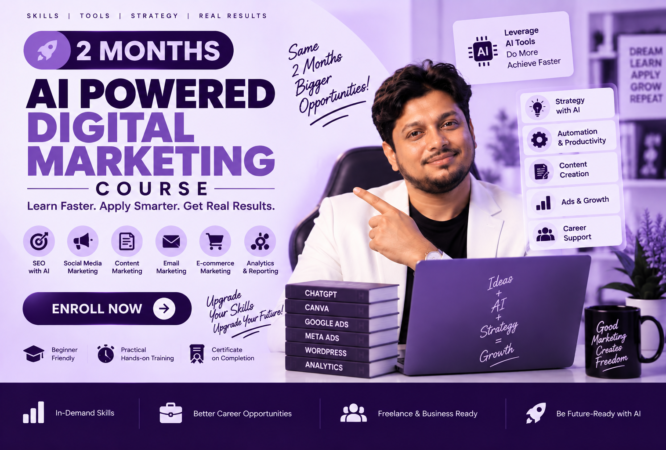

DIGITAL MARKETING COURSE ( 2 MONTHS + INTERNSHIP+ LIVE PROJECTS + FREE TOOLS + BONUSES)
🚀 STOP Guessing. START Growing. Master Digital Marketing and Transform Your Future! Are You Tired of Your Business or Career Being Invisible Online?...



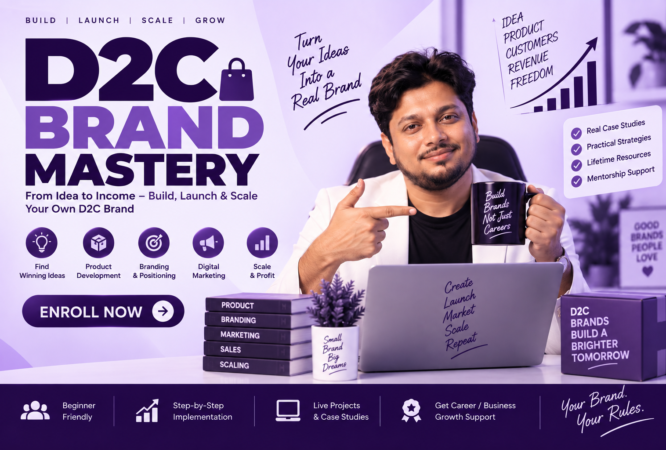
D2C Brand Mastery
D2C Brand Mastery – Course Description D2C Brand Mastery is a practical, result-driven course designed for entrepreneurs, marketers, business owners, and aspiring brand builders who...
In the fast-paced digital economy of 2026, many aspiring marketers jump straight into flashy social media campaigns or high-budget paid advertising. However, seasoned experts know that Search Engine Optimization (SEO) is the bedrock upon which all successful digital strategies are built.
Understanding SEO isn’t just about ranking first on Google; it is about understanding the digital consumer. Here is why SEO knowledge is the essential DNA of a complete digital marketing education.
1. Mastering the Psychology of Search
Unlike social media marketing, which is often “interruption-based,” SEO is “intent-based.” When a user types a query into a search engine, they are actively looking for a solution. Learning SEO teaches you how to decode User Intent.
By mastering keyword research, a digital marketer learns how to align a brand’s message with the specific needs of the audience at different stages of the buyer’s journey—from awareness to conversion.
2. Improving User Experience (UX) and Site Health
Modern SEO is no longer just about keywords; it’s about performance. Technical SEO knowledge ensures that a marketer understands:
Core Web Vitals: How loading speed and visual stability affect user retention.
Mobile-First Indexing: Ensuring a seamless experience across all devices.
Site Architecture: Organizing information so users (and bots) can find it easily.
When you understand these technical elements, you become a better web strategist, capable of reducing bounce rates and increasing time-on-site across all your marketing channels.
3. Creating Content That Converts
SEO provides the data-driven framework for Content Marketing. Instead of guessing what to write about, SEO knowledge allows you to identify “content gaps” in the market. It teaches you how to structure articles using proper header hierarchies and how to optimize for AI Overviews and featured snippets, ensuring your brand remains the primary authority in your niche.
The Synergy of SEO in Digital Marketing
| Marketing Discipline | How SEO Enhances It |
| Paid Search (PPC) | High SEO Quality Scores lead to lower costs per click. |
| Social Media | Keyword trends inform what topics will go viral. |
| Email Marketing | SEO-optimized landing pages increase sign-up conversions. |
| Brand Management | Dominating the SERP builds trust and “mental availability.” |
4. Long-Term ROI and Sustainability
Paid ads stop working the moment you stop paying. SEO, however, is a compounding asset. A marketer who understands SEO knows how to build “evergreen” traffic sources that provide a return on investment for years. This sustainable mindset is crucial for long-term business growth and budget management.
5. Navigating the AI-Driven Future
As we move further into 2026, search engines are evolving into “Answer Engines.” Marketers with a foundation in SEO are uniquely positioned to adapt to Generative AI and voice search. They understand how to structure data so that AI models can crawl and recommend their brand’s products.

DIGITAL MARKETING COURSE ( 2 MONTHS + INTERNSHIP+ LIVE PROJECTS + FREE TOOLS + BONUSES)


D2C Brand Mastery
Master Google Ads, Meta Ads, AI-Powered Campaigns & Performance Marketing
The digital advertising landscape has changed dramatically over the last few years. Traditional marketing methods are no longer enough to attract customers, generate leads, and drive sales in an increasingly competitive online environment. Today, businesses rely heavily on Paid Advertising Platforms such as Google Ads, Facebook Ads, Instagram Ads, YouTube Ads, LinkedIn Ads, and emerging AI-powered advertising solutions to reach the right audience at the right time.
Our Advanced Digital Marketing Course on Paid Advertising is designed to help students, professionals, entrepreneurs, freelancers, and business owners master modern performance marketing techniques while leveraging Artificial Intelligence (AI) tools to improve campaign efficiency, targeting, content creation, and ROI.
Whether you’re looking to start a career in digital marketing, grow your business, or become a high-income performance marketer, this course provides practical, industry-focused training aligned with the latest market trends.
Why Paid Advertising is More Important Than Ever
With organic reach declining across most digital platforms, businesses are increasingly investing in paid advertising to generate immediate visibility and measurable results.
Current Digital Advertising Trends
| Metric | Current Market Scenario |
|---|---|
| Global Digital Ad Spend | Expected to exceed $800 Billion |
| Mobile Advertising Share | Over 70% of total ad spend |
| AI Adoption in Marketing | Growing rapidly across industries |
| Video Advertising Growth | Highest among digital channels |
| Performance Marketing Demand | Increasing across startups and enterprises |
| Demand for Paid Ads Specialists | High in India and global markets |
Modern businesses want measurable results. Unlike traditional marketing, paid advertising provides real-time data on impressions, clicks, conversions, leads, sales, and return on investment.
The Rise of AI in Digital Advertising
Artificial Intelligence is revolutionizing the advertising industry. Platforms such as Google and Meta now use advanced machine learning algorithms to optimize bidding, audience targeting, ad delivery, and campaign performance.
How AI is Changing Paid Advertising
| Traditional Advertising | AI-Powered Advertising |
|---|---|
| Manual audience selection | Automated audience discovery |
| Manual bid adjustments | Smart bidding strategies |
| Human-generated ad copy | AI-generated creative assets |
| Limited testing | Automated A/B testing |
| Basic optimization | Predictive optimization |
| Time-consuming reporting | AI-powered insights |
In this course, students learn how to combine human strategy with AI tools to achieve superior campaign performance.
What You Will Learn
Google Ads Mastery
Learn how to create, manage, optimize, and scale campaigns across Google’s advertising ecosystem.
Topics Covered:
Google Search Ads
Google Display Ads
YouTube Advertising
Performance Max Campaigns
Google Shopping Ads
App Promotion Campaigns
Keyword Research
Conversion Tracking
Remarketing Strategies
Smart Bidding Techniques
Meta Ads (Facebook & Instagram)
Meta remains one of the most powerful advertising platforms for lead generation and eCommerce growth.
Topics Covered:
Facebook Ads Manager
Campaign Objectives
Audience Targeting
Lookalike Audiences
Retargeting Campaigns
Lead Generation Ads
Instagram Advertising
Conversion Campaigns
Funnel-Based Advertising
Scaling Winning Campaigns
AI-Powered Advertising Tools
The future belongs to marketers who understand AI.
Students will learn:
AI Content Creation
AI Ad Copy Generation
AI Image Creation
AI Audience Analysis
AI Marketing Automation
ChatGPT for Advertising
Predictive Marketing Strategies
AI-Based Landing Page Optimization
Popular AI tools covered include ChatGPT, Gemini, Claude, Midjourney alternatives, Canva AI, Meta AI, and Google AI-powered marketing features.
Industry Demand for Paid Ads Professionals
The demand for Performance Marketers has increased significantly because businesses need professionals who can generate measurable results.
Career Opportunities
| Job Role | Average Demand |
|---|---|
| Performance Marketing Executive | Very High |
| Google Ads Specialist | High |
| Meta Ads Specialist | High |
| PPC Analyst | High |
| Digital Marketing Manager | Very High |
| Growth Marketer | Growing Rapidly |
| Freelance Media Buyer | High |
| Marketing Automation Specialist | Emerging |
Startups, agencies, SaaS companies, eCommerce brands, educational institutions, healthcare businesses, and real estate companies actively hire paid advertising professionals.
Why Businesses Prefer Paid Advertising
Benefits of Paid Ads
✔ Immediate visibility
✔ Precise audience targeting
✔ Scalable lead generation
✔ Measurable ROI
✔ Faster business growth
✔ Increased website traffic
✔ Better customer acquisition
✔ Improved brand awareness
Unlike SEO, which may take months to generate results, paid advertising can start producing leads and sales almost immediately.
Practical Learning Approach
This course focuses on implementation rather than theory.
Students receive hands-on training on:
Live Campaign Creation
Budget Planning
Campaign Optimization
Conversion Tracking Setup
Google Tag Manager
Google Analytics 4 (GA4)
Landing Page Optimization
Lead Generation Systems
Remarketing Campaigns
ROI Measurement
You will work on real-world projects and case studies to gain practical industry experience.
AI + Paid Advertising = Future-Proof Skill
The marketing industry is moving toward automation and intelligent advertising.
Marketers who understand both advertising platforms and AI technologies will have a significant advantage over traditional marketers.
Future Skills Covered
| Traditional Skill | Future Skill |
|---|---|
| Campaign Setup | AI Campaign Optimization |
| Manual Reporting | Automated Analytics |
| Copywriting | AI-Assisted Copywriting |
| Audience Research | Predictive Audience Intelligence |
| Creative Testing | AI Creative Optimization |
| Manual Analysis | Machine Learning Insights |
This combination of Paid Advertising and Artificial Intelligence is becoming one of the most sought-after skills in the digital economy.
Who Should Join This Course?
This course is ideal for:
Students
Working Professionals
Entrepreneurs
Business Owners
Freelancers
Marketing Executives
Sales Professionals
Startup Founders
Agency Owners
Career Switchers
No prior experience is required. Beginners as well as experienced marketers can benefit from the structured learning approach.
Course Outcomes
After completing this course, you will be able to:
Create profitable Google Ads campaigns
Run high-converting Facebook and Instagram Ads
Use AI tools for campaign optimization
Generate leads and sales consistently
Track conversions accurately
Build complete marketing funnels
Analyze campaign performance professionally
Work as a Performance Marketing Specialist
Manage advertising budgets confidently
Offer paid advertising services as a freelancer or consultant
Become a Certified Performance Marketing Professional
The future of digital marketing belongs to professionals who can combine data, creativity, automation, and AI-driven decision-making. This Advanced Paid Advertising Course equips you with practical skills, industry knowledge, and hands-on experience needed to succeed in today’s competitive digital marketing environment.
Whether your goal is securing a high-paying job, growing your business, launching a freelance career, or becoming a digital marketing consultant, mastering Paid Advertising and AI-powered marketing strategies can open doors to unlimited opportunities in the rapidly evolving digital economy.
-
All levels
-
4 Students
-
8 Lessons
-
All levels
-
4 Students
-
8 Lessons
-
All levels
-
0 Students
-
63 Lessons
-
All levels
-
0 Students
-
63 Lessons
-
All levels
-
0 Students
-
18 Lessons
Master Modern Marketing, Product Positioning, Go-To-Market Strategies & AI-Powered Growth
In today’s highly competitive business landscape, creating a great product is no longer enough. Companies must understand their customers, position their products effectively, build compelling value propositions, and execute data-driven marketing strategies to achieve sustainable growth.
This is where Marketing Strategy and Product Marketing become critical business functions.
Our Marketing Strategy & Product Marketing Course with AI Integration is designed for students, marketing professionals, entrepreneurs, startup founders, business owners, product managers, and aspiring marketers who want to learn how successful brands launch, position, promote, and scale products in modern markets.
The course combines traditional marketing principles, strategic planning, consumer psychology, product positioning, branding, customer acquisition, growth marketing, and AI-powered marketing tools to help learners become future-ready marketing professionals.
Whether your goal is to build a successful brand, launch a new product, improve marketing performance, or advance your career, this course provides practical, industry-focused training aligned with the latest market trends.
Why Marketing Strategy Matters More Than Ever
Consumer behavior has changed dramatically over the past decade.
Today’s customers interact with brands across multiple touchpoints including:
Search Engines
Social Media Platforms
E-commerce Websites
Mobile Applications
Online Communities
Video Platforms
Email Marketing
Influencer Channels
As competition increases, businesses need clear marketing strategies to attract, engage, and retain customers.
Companies that lack a defined marketing strategy often struggle with:
Poor brand visibility
Low customer engagement
Inefficient advertising spend
Weak product positioning
Low conversion rates
Slow business growth
A well-designed marketing strategy helps businesses achieve measurable and scalable growth.
Current Market Trends
| Market Trend | Impact on Businesses |
|---|---|
| Digital-First Consumers | Increased online marketing demand |
| AI-Powered Marketing | Faster decision-making |
| Omnichannel Marketing | Better customer experiences |
| Personalization | Higher conversion rates |
| Product-Led Growth | Faster customer acquisition |
| Data-Driven Marketing | Improved ROI measurement |
| Customer Experience Focus | Higher retention rates |
Organizations increasingly seek professionals who understand both strategic marketing and product marketing frameworks.
The Rise of Product Marketing
Product Marketing serves as the bridge between product development, sales, and customer success.
A Product Marketer ensures that:
The right product reaches the right audience
Customer problems are clearly understood
Product messaging is compelling
Launch strategies are successful
Sales teams are properly equipped
Market feedback drives product improvements
Without effective product marketing, even exceptional products can fail in competitive markets.
Traditional Marketing vs Product Marketing
| Traditional Marketing | Product Marketing |
|---|---|
| Focus on brand awareness | Focus on product adoption |
| Broad audience targeting | Customer-specific targeting |
| General campaigns | Product-specific campaigns |
| Marketing communication | Value proposition communication |
| Lead generation focus | Customer acquisition and retention |
| Brand growth | Product growth |
This course teaches learners how to combine both disciplines for maximum business impact.
What You Will Learn
Fundamentals of Marketing Strategy
Build a strong foundation in modern marketing principles.
Topics Covered:
Marketing Fundamentals
Customer Journey Mapping
Consumer Behavior Analysis
Market Segmentation
Target Audience Identification
Competitive Analysis
Brand Positioning
Marketing Planning Frameworks
Strategic Decision Making
Market Research & Consumer Insights
Successful marketing starts with understanding customers.
Students learn:
Primary Research Techniques
Secondary Research Methods
Customer Surveys
Focus Groups
Competitor Research
Industry Analysis
Consumer Psychology
Buying Behavior Analysis
Market Opportunity Assessment
Product Marketing Fundamentals
Learn how leading companies position and market products effectively.
Topics Covered:
Product Marketing Frameworks
Product Lifecycle Management
Product Positioning
Product Messaging
Value Proposition Development
Customer Personas
Product-Market Fit
Competitive Differentiation
Product Storytelling
Go-To-Market (GTM) Strategy
One of the most valuable skills for modern marketers.
Students learn:
Market Entry Strategies
Product Launch Planning
Audience Segmentation
Pricing Strategy
Distribution Channels
Sales Enablement
Launch Campaign Design
Customer Acquisition Planning
Performance Measurement
Branding & Positioning Strategy
Strong brands create trust, loyalty, and competitive advantage.
Topics Include:
Brand Identity Development
Brand Architecture
Brand Equity
Positioning Statements
Brand Communication
Emotional Branding
Personal Branding
Reputation Management
Brand Consistency Frameworks
Digital Marketing Strategy
Modern businesses require integrated marketing approaches.
Students learn how to create strategic marketing plans across:
Search Engine Optimization (SEO)
Search Engine Marketing (SEM)
Social Media Marketing
Email Marketing
Influencer Marketing
Content Marketing
Video Marketing
Affiliate Marketing
Marketing Automation
Growth Marketing & Customer Acquisition
Learn the strategies used by high-growth startups and global brands.
Topics Covered:
Customer Acquisition Strategies
Growth Funnels
Conversion Optimization
Retention Marketing
Referral Marketing
Community Building
Customer Loyalty Programs
Growth Experiments
Performance Marketing Integration
AI-Powered Marketing Strategy
Artificial Intelligence is transforming marketing faster than any previous technology.
Students learn how to use AI for:
Market Research
Customer Analysis
Content Creation
Marketing Automation
Campaign Planning
Predictive Analytics
Audience Segmentation
Product Positioning
Competitive Intelligence
Popular AI tools covered include ChatGPT, Gemini, Claude, Microsoft Copilot, Canva AI, and emerging AI marketing platforms.
Traditional Marketing vs AI-Driven Marketing
| Traditional Approach | AI-Powered Approach |
|---|---|
| Manual research | AI-assisted research |
| Human-only content creation | AI-enhanced content creation |
| Basic audience targeting | Predictive audience targeting |
| Manual reporting | Automated insights |
| Static campaigns | Dynamic optimization |
| Slower execution | Faster decision-making |
Marketing professionals who understand AI have a significant competitive advantage in today’s job market.
Product Launch Strategy Framework
Students learn how successful products are launched using proven frameworks.
Product Launch Stages
| Stage | Objective |
|---|---|
| Research | Understand customer needs |
| Positioning | Define product value |
| Messaging | Communicate benefits |
| Pre-Launch | Build anticipation |
| Launch | Generate awareness and sales |
| Growth | Scale adoption |
| Retention | Increase customer loyalty |
This framework can be applied across startups, SaaS companies, e-commerce businesses, and traditional enterprises.
Industry Demand for Marketing Strategists & Product Marketers
Organizations increasingly require professionals who can align products with market needs and business goals.
Career Opportunities
| Job Role | Market Demand |
|---|---|
| Marketing Strategist | Very High |
| Product Marketing Manager | Very High |
| Brand Manager | High |
| Growth Marketing Manager | Growing Rapidly |
| Product Manager | High |
| Market Research Analyst | High |
| Customer Insights Specialist | Emerging |
| Go-To-Market Specialist | Increasing |
Industries actively hiring include:
Technology & SaaS
E-commerce
FinTech
EdTech
Healthcare
Real Estate
FMCG
Startups
Consulting Firms
Practical Learning Approach
This course focuses on real-world implementation through:
Product Launch Simulations
Marketing Strategy Projects
Market Research Assignments
Brand Positioning Exercises
Competitor Analysis Reports
Customer Persona Development
Go-To-Market Planning
Product Messaging Workshops
AI Marketing Projects
Students gain practical experience applicable across industries.
Who Should Join This Course?
This course is ideal for:
Students
Marketing Professionals
Product Managers
Entrepreneurs
Startup Founders
Business Owners
Sales Professionals
Digital Marketers
Brand Managers
Consultants
Freelancers
No prior product marketing experience is required.
Course Outcomes
After completing this course, you will be able to:
Develop effective marketing strategies
Conduct professional market research
Build customer personas
Create strong value propositions
Position products competitively
Design successful Go-To-Market plans
Launch products confidently
Build growth marketing frameworks
Use AI tools for strategic decision making
Improve customer acquisition and retention
Align marketing efforts with business goals
Become a Future-Ready Marketing & Product Strategy Professional
As businesses face increasing competition and rapidly changing customer expectations, the demand for skilled Marketing Strategists and Product Marketing Professionals continues to grow. Companies need experts who can understand customers, position products effectively, create compelling messaging, and leverage AI-powered tools to drive growth.
This Marketing Strategy & Product Marketing Course equips you with the strategic thinking, practical frameworks, industry knowledge, and AI-driven capabilities needed to thrive in modern marketing environments. Whether your goal is career advancement, business growth, startup success, or becoming a marketing leader, mastering marketing strategy and product marketing can unlock exceptional opportunities in the global digital economy.
DIGITAL MARKETING COURSE ( 2 MONTHS + INTERNSHIP+ LIVE PROJECTS + FREE TOOLS + BONUSES)
🚀 STOP Guessing. START Growing. Master Digital Marketing and Transform Your Future! Are You Tired of Your Business or Career Being Invisible Online?...
D2C Brand Mastery
D2C Brand Mastery – Course Description D2C Brand Mastery is a practical, result-driven course designed for entrepreneurs, marketers, business owners, and aspiring brand builders who...
OUR FLAGSHIP COURSES
Master Data Analysis, Business Intelligence, Reporting & AI-Powered Decision Making
In today’s digital-first business environment, data has become one of the most valuable assets for organizations. Every click, website visit, advertisement, sale, customer interaction, and marketing campaign generates data. However, data alone has little value unless it can be analyzed, interpreted, and transformed into actionable insights.
This is where Advanced Excel and Marketing Analytics play a crucial role.
Our Advanced Excel & Analytics Course with AI Integration is designed to help students, working professionals, marketers, entrepreneurs, analysts, and business owners develop industry-ready analytical skills. The course combines advanced Excel techniques, business reporting, dashboard creation, marketing analytics, data visualization, and AI-powered analysis tools that are increasingly shaping modern workplaces.
Whether your goal is to secure a high-paying job, improve business performance, optimize marketing campaigns, or become a data-driven decision maker, this course provides practical, hands-on training aligned with current industry demands.
Why Excel and Analytics Skills Are More Important Than Ever
Organizations across industries are investing heavily in data analytics to improve decision-making, reduce costs, increase efficiency, and maximize profitability.
Today, businesses rely on data to answer critical questions:
Which marketing campaigns generate the highest ROI?
Which products drive the most revenue?
Why are customers leaving?
Which sales channels perform best?
How can budgets be optimized?
Which audience segments convert better?
Professionals who can analyze data and provide actionable recommendations are among the most sought-after employees in the market.
Current Industry Trends
| Metric | Current Market Scenario |
|---|---|
| Businesses Using Data Analytics | Over 90% of large organizations |
| Excel Usage in Corporates | Widely used across industries |
| Demand for Data Analysts | Growing rapidly |
| Marketing Analytics Adoption | Increasing across all sectors |
| AI-Powered Analytics Tools | Becoming mainstream |
| Dashboard Reporting Demand | Very High |
Data-driven decision making is no longer optional—it is now a core requirement for business growth.
The Role of AI in Analytics
Artificial Intelligence is transforming how businesses analyze and interpret data.
Instead of spending hours manually reviewing spreadsheets, professionals can now leverage AI-powered tools to automate analysis, identify patterns, forecast trends, and generate insights faster than ever before.
Traditional Analytics vs AI-Powered Analytics
| Traditional Analytics | AI-Powered Analytics |
|---|---|
| Manual data cleaning | Automated data preparation |
| Spreadsheet calculations | Predictive analysis |
| Static reports | Dynamic AI insights |
| Manual forecasting | Machine learning predictions |
| Time-consuming analysis | Real-time recommendations |
| Human-only interpretation | AI-assisted decision making |
In this course, students learn how to combine advanced Excel skills with AI tools to improve productivity and business outcomes.
What You Will Learn
Advanced Microsoft Excel
Master Excel from beginner to advanced professional level.
Core Excel Skills
Excel Interface & Navigation
Data Formatting
Conditional Formatting
Data Validation
Named Ranges
Excel Tables
Spreadsheet Best Practices
Advanced Formulas & Functions
IF Functions
Nested IF Statements
VLOOKUP
HLOOKUP
XLOOKUP
INDEX & MATCH
SUMIF & SUMIFS
COUNTIF & COUNTIFS
TEXT Functions
DATE Functions
Logical Functions
Financial Functions
Data Analysis in Excel
Learn how businesses analyze large datasets efficiently.
Topics Covered:
Sorting & Filtering
Advanced Filters
Data Cleaning
Duplicate Removal
Data Transformation
Data Consolidation
Error Handling
Statistical Analysis
Trend Analysis
Pivot Tables & Pivot Charts
Pivot Tables remain one of the most demanded Excel skills in the workplace.
Students learn:
Creating Pivot Tables
Multi-Level Analysis
Interactive Reporting
Pivot Charts
Data Summarization
Dynamic Filtering
Performance Dashboards
Dashboard Development
Transform raw data into professional dashboards used by business leaders.
Topics Include:
KPI Dashboards
Executive Dashboards
Marketing Dashboards
Sales Dashboards
HR Dashboards
Financial Dashboards
Interactive Reporting
Marketing Analytics Training
Modern marketers must understand numbers as much as creativity.
This module focuses on measuring and improving marketing performance.
Key Analytics Concepts
Students learn how to track and analyze:
Website Traffic
Lead Generation
Conversion Rate
Cost Per Lead (CPL)
Cost Per Acquisition (CPA)
Return on Ad Spend (ROAS)
Customer Acquisition Cost (CAC)
Customer Lifetime Value (CLV)
Bounce Rate
Engagement Metrics
Google Analytics 4 (GA4)
Google Analytics has become one of the most important tools for digital marketers.
Topics Covered:
GA4 Setup
Event Tracking
User Journey Analysis
Traffic Source Analysis
Audience Insights
Conversion Tracking
Goal Configuration
Funnel Analysis
E-commerce Tracking
Custom Reports
Marketing Reporting & KPI Analysis
Learn how top-performing businesses measure success.
Important KPIs Covered
| Marketing KPI | Purpose |
|---|---|
| Website Traffic | Measures visibility |
| Conversion Rate | Measures effectiveness |
| Cost Per Lead | Evaluates efficiency |
| Customer Acquisition Cost | Measures profitability |
| ROAS | Advertising performance |
| Customer Lifetime Value | Long-term business value |
| Engagement Rate | Audience interaction |
| Revenue Attribution | Marketing contribution |
Students learn how to build reports that management teams use for decision making.
AI Tools for Excel and Analytics
Artificial Intelligence is becoming an essential skill for analysts.
Students learn how to use:
ChatGPT for Data Analysis
AI-Powered Excel Features
Google Gemini
Microsoft Copilot
AI Dashboard Assistance
Automated Report Generation
Data Visualization Tools
Predictive Analytics Tools
How AI Improves Analytics
| Traditional Workflow | AI-Assisted Workflow |
|---|---|
| Manual formula creation | AI-generated formulas |
| Manual report writing | Automated insights |
| Static dashboards | Smart dashboards |
| Basic forecasting | Predictive forecasting |
| Time-consuming analysis | Faster decision making |
| Human-only reporting | AI-assisted reporting |
The ability to use AI alongside Excel and analytics is becoming a critical competitive advantage.
Industry Demand for Excel & Analytics Professionals
Companies actively seek professionals who can convert data into meaningful business insights.
Career Opportunities
| Job Role | Market Demand |
|---|---|
| Data Analyst | Very High |
| Business Analyst | High |
| Marketing Analyst | Very High |
| MIS Executive | High |
| Reporting Analyst | High |
| Performance Analyst | Growing Rapidly |
| Operations Analyst | High |
| Data Visualization Specialist | Emerging |
Industries hiring analytics professionals include:
IT & Software
E-commerce
Banking & Finance
Healthcare
Education
Digital Marketing Agencies
Real Estate
Retail & FMCG
Startups
Practical Learning Approach
This course emphasizes real-world implementation.
Students work on:
Business Reports
Marketing Dashboards
Sales Analysis Projects
Revenue Forecasting
Customer Data Analysis
Campaign Performance Reports
KPI Tracking Systems
Executive Reporting Frameworks
Hands-on projects ensure that students gain practical experience rather than just theoretical knowledge.
Who Should Join This Course?
This course is ideal for:
Students
Graduates
Working Professionals
Marketing Executives
Digital Marketers
Sales Professionals
Entrepreneurs
Business Owners
MIS Executives
Data Analysts
Freelancers
No coding background is required.
Course Outcomes
After completing this course, you will be able to:
Analyze large datasets confidently
Create professional Excel reports
Build interactive dashboards
Use advanced Excel formulas efficiently
Track marketing performance accurately
Generate business insights from data
Create executive-level reports
Use AI tools for faster analysis
Improve decision-making capabilities
Build a career in analytics and business intelligence
Future-Proof Your Career with Excel, Analytics & AI
Organizations increasingly rely on data-driven strategies to compete and grow. Professionals who can analyze data, create reports, build dashboards, and leverage AI tools for business intelligence are among the most valuable assets in today’s workforce.
This Advanced Excel & Analytics Course equips you with practical skills, hands-on experience, and AI-powered analytical capabilities required to thrive in modern businesses. Whether you want to secure a better job, increase your earning potential, optimize marketing campaigns, or become a business analyst, mastering Excel, Analytics, and AI can unlock exceptional career opportunities in the digital economy.
Master Modern Marketing, Product Positioning, Go-To-Market Strategies & AI-Powered Growth
In today’s highly competitive business landscape, creating a great product is no longer enough. Companies must understand their customers, position their products effectively, build compelling value propositions, and execute data-driven marketing strategies to achieve sustainable growth.
This is where Marketing Strategy and Product Marketing become critical business functions.
Our Marketing Strategy & Product Marketing Course with AI Integration is designed for students, marketing professionals, entrepreneurs, startup founders, business owners, product managers, and aspiring marketers who want to learn how successful brands launch, position, promote, and scale products in modern markets.
The course combines traditional marketing principles, strategic planning, consumer psychology, product positioning, branding, customer acquisition, growth marketing, and AI-powered marketing tools to help learners become future-ready marketing professionals.
Whether your goal is to build a successful brand, launch a new product, improve marketing performance, or advance your career, this course provides practical, industry-focused training aligned with the latest market trends.
Why Marketing Strategy Matters More Than Ever
Consumer behavior has changed dramatically over the past decade.
Today’s customers interact with brands across multiple touchpoints including:
Search Engines
Social Media Platforms
E-commerce Websites
Mobile Applications
Online Communities
Video Platforms
Email Marketing
Influencer Channels
As competition increases, businesses need clear marketing strategies to attract, engage, and retain customers.
Companies that lack a defined marketing strategy often struggle with:
Poor brand visibility
Low customer engagement
Inefficient advertising spend
Weak product positioning
Low conversion rates
Slow business growth
A well-designed marketing strategy helps businesses achieve measurable and scalable growth.
Current Market Trends
| Market Trend | Impact on Businesses |
|---|---|
| Digital-First Consumers | Increased online marketing demand |
| AI-Powered Marketing | Faster decision-making |
| Omnichannel Marketing | Better customer experiences |
| Personalization | Higher conversion rates |
| Product-Led Growth | Faster customer acquisition |
| Data-Driven Marketing | Improved ROI measurement |
| Customer Experience Focus | Higher retention rates |
Organizations increasingly seek professionals who understand both strategic marketing and product marketing frameworks.
The Rise of Product Marketing
Product Marketing serves as the bridge between product development, sales, and customer success.
A Product Marketer ensures that:
The right product reaches the right audience
Customer problems are clearly understood
Product messaging is compelling
Launch strategies are successful
Sales teams are properly equipped
Market feedback drives product improvements
Without effective product marketing, even exceptional products can fail in competitive markets.
Traditional Marketing vs Product Marketing
| Traditional Marketing | Product Marketing |
|---|---|
| Focus on brand awareness | Focus on product adoption |
| Broad audience targeting | Customer-specific targeting |
| General campaigns | Product-specific campaigns |
| Marketing communication | Value proposition communication |
| Lead generation focus | Customer acquisition and retention |
| Brand growth | Product growth |
This course teaches learners how to combine both disciplines for maximum business impact.
What You Will Learn
Fundamentals of Marketing Strategy
Build a strong foundation in modern marketing principles.
Topics Covered:
Marketing Fundamentals
Customer Journey Mapping
Consumer Behavior Analysis
Market Segmentation
Target Audience Identification
Competitive Analysis
Brand Positioning
Marketing Planning Frameworks
Strategic Decision Making
Market Research & Consumer Insights
Successful marketing starts with understanding customers.
Students learn:
Primary Research Techniques
Secondary Research Methods
Customer Surveys
Focus Groups
Competitor Research
Industry Analysis
Consumer Psychology
Buying Behavior Analysis
Market Opportunity Assessment
Product Marketing Fundamentals
Learn how leading companies position and market products effectively.
Topics Covered:
Product Marketing Frameworks
Product Lifecycle Management
Product Positioning
Product Messaging
Value Proposition Development
Customer Personas
Product-Market Fit
Competitive Differentiation
Product Storytelling
Go-To-Market (GTM) Strategy
One of the most valuable skills for modern marketers.
Students learn:
Market Entry Strategies
Product Launch Planning
Audience Segmentation
Pricing Strategy
Distribution Channels
Sales Enablement
Launch Campaign Design
Customer Acquisition Planning
Performance Measurement
Branding & Positioning Strategy
Strong brands create trust, loyalty, and competitive advantage.
Topics Include:
Brand Identity Development
Brand Architecture
Brand Equity
Positioning Statements
Brand Communication
Emotional Branding
Personal Branding
Reputation Management
Brand Consistency Frameworks
Digital Marketing Strategy
Modern businesses require integrated marketing approaches.
Students learn how to create strategic marketing plans across:
Search Engine Optimization (SEO)
Search Engine Marketing (SEM)
Social Media Marketing
Email Marketing
Influencer Marketing
Content Marketing
Video Marketing
Affiliate Marketing
Marketing Automation
Growth Marketing & Customer Acquisition
Learn the strategies used by high-growth startups and global brands.
Topics Covered:
Customer Acquisition Strategies
Growth Funnels
Conversion Optimization
Retention Marketing
Referral Marketing
Community Building
Customer Loyalty Programs
Growth Experiments
Performance Marketing Integration
AI-Powered Marketing Strategy
Artificial Intelligence is transforming marketing faster than any previous technology.
Students learn how to use AI for:
Market Research
Customer Analysis
Content Creation
Marketing Automation
Campaign Planning
Predictive Analytics
Audience Segmentation
Product Positioning
Competitive Intelligence
Popular AI tools covered include ChatGPT, Gemini, Claude, Microsoft Copilot, Canva AI, and emerging AI marketing platforms.
Traditional Marketing vs AI-Driven Marketing
| Traditional Approach | AI-Powered Approach |
|---|---|
| Manual research | AI-assisted research |
| Human-only content creation | AI-enhanced content creation |
| Basic audience targeting | Predictive audience targeting |
| Manual reporting | Automated insights |
| Static campaigns | Dynamic optimization |
| Slower execution | Faster decision-making |
Marketing professionals who understand AI have a significant competitive advantage in today’s job market.
Product Launch Strategy Framework
Students learn how successful products are launched using proven frameworks.
Product Launch Stages
| Stage | Objective |
|---|---|
| Research | Understand customer needs |
| Positioning | Define product value |
| Messaging | Communicate benefits |
| Pre-Launch | Build anticipation |
| Launch | Generate awareness and sales |
| Growth | Scale adoption |
| Retention | Increase customer loyalty |
This framework can be applied across startups, SaaS companies, e-commerce businesses, and traditional enterprises.
Industry Demand for Marketing Strategists & Product Marketers
Organizations increasingly require professionals who can align products with market needs and business goals.
Career Opportunities
| Job Role | Market Demand |
|---|---|
| Marketing Strategist | Very High |
| Product Marketing Manager | Very High |
| Brand Manager | High |
| Growth Marketing Manager | Growing Rapidly |
| Product Manager | High |
| Market Research Analyst | High |
| Customer Insights Specialist | Emerging |
| Go-To-Market Specialist | Increasing |
Industries actively hiring include:
Technology & SaaS
E-commerce
FinTech
EdTech
Healthcare
Real Estate
FMCG
Startups
Consulting Firms
Practical Learning Approach
This course focuses on real-world implementation through:
Product Launch Simulations
Marketing Strategy Projects
Market Research Assignments
Brand Positioning Exercises
Competitor Analysis Reports
Customer Persona Development
Go-To-Market Planning
Product Messaging Workshops
AI Marketing Projects
Students gain practical experience applicable across industries.
Who Should Join This Course?
This course is ideal for:
Students
Marketing Professionals
Product Managers
Entrepreneurs
Startup Founders
Business Owners
Sales Professionals
Digital Marketers
Brand Managers
Consultants
Freelancers
No prior product marketing experience is required.
Course Outcomes
After completing this course, you will be able to:
Develop effective marketing strategies
Conduct professional market research
Build customer personas
Create strong value propositions
Position products competitively
Design successful Go-To-Market plans
Launch products confidently
Build growth marketing frameworks
Use AI tools for strategic decision making
Improve customer acquisition and retention
Align marketing efforts with business goals
Become a Future-Ready Marketing & Product Strategy Professional
As businesses face increasing competition and rapidly changing customer expectations, the demand for skilled Marketing Strategists and Product Marketing Professionals continues to grow. Companies need experts who can understand customers, position products effectively, create compelling messaging, and leverage AI-powered tools to drive growth.
This Marketing Strategy & Product Marketing Course equips you with the strategic thinking, practical frameworks, industry knowledge, and AI-driven capabilities needed to thrive in modern marketing environments. Whether your goal is career advancement, business growth, startup success, or becoming a marketing leader, mastering marketing strategy and product marketing can unlock exceptional opportunities in the global digital economy.
In today’s highly competitive business landscape, creating a great product is no longer enough. Companies must understand their customers, position their products effectively, build compelling value propositions, and execute data-driven marketing strategies to achieve sustainable growth.
This is where Marketing Strategy and Product Marketing become critical business functions.
Our Marketing Strategy & Product Marketing Course with AI Integration is designed for students, marketing professionals, entrepreneurs, startup founders, business owners, product managers, and aspiring marketers who want to learn how successful brands launch, position, promote, and scale products in modern markets.
The course combines traditional marketing principles, strategic planning, consumer psychology, product positioning, branding, customer acquisition, growth marketing, and AI-powered marketing tools to help learners become future-ready marketing professionals.
Whether your goal is to build a successful brand, launch a new product, improve marketing performance, or advance your career, this course provides practical, industry-focused training aligned with the latest market trends.
Why Marketing Strategy Matters More Than Ever
Consumer behavior has changed dramatically over the past decade.
Today’s customers interact with brands across multiple touchpoints including:
Search Engines
Social Media Platforms
E-commerce Websites
Mobile Applications
Online Communities
Video Platforms
Email Marketing
Influencer Channels
As competition increases, businesses need clear marketing strategies to attract, engage, and retain customers.
Companies that lack a defined marketing strategy often struggle with:
Poor brand visibility
Low customer engagement
Inefficient advertising spend
Weak product positioning
Low conversion rates
Slow business growth
A well-designed marketing strategy helps businesses achieve measurable and scalable growth.
Current Market Trends
| Market Trend | Impact on Businesses |
|---|---|
| Digital-First Consumers | Increased online marketing demand |
| AI-Powered Marketing | Faster decision-making |
| Omnichannel Marketing | Better customer experiences |
| Personalization | Higher conversion rates |
| Product-Led Growth | Faster customer acquisition |
| Data-Driven Marketing | Improved ROI measurement |
| Customer Experience Focus | Higher retention rates |
Organizations increasingly seek professionals who understand both strategic marketing and product marketing frameworks.
The Rise of Product Marketing
Product Marketing serves as the bridge between product development, sales, and customer success.
A Product Marketer ensures that:
The right product reaches the right audience
Customer problems are clearly understood
Product messaging is compelling
Launch strategies are successful
Sales teams are properly equipped
Market feedback drives product improvements
Without effective product marketing, even exceptional products can fail in competitive markets.
Traditional Marketing vs Product Marketing
| Traditional Marketing | Product Marketing |
|---|---|
| Focus on brand awareness | Focus on product adoption |
| Broad audience targeting | Customer-specific targeting |
| General campaigns | Product-specific campaigns |
| Marketing communication | Value proposition communication |
| Lead generation focus | Customer acquisition and retention |
| Brand growth | Product growth |
This course teaches learners how to combine both disciplines for maximum business impact.
What You Will Learn
Fundamentals of Marketing Strategy
Build a strong foundation in modern marketing principles.
Topics Covered:
Marketing Fundamentals
Customer Journey Mapping
Consumer Behavior Analysis
Market Segmentation
Target Audience Identification
Competitive Analysis
Brand Positioning
Marketing Planning Frameworks
Strategic Decision Making
Market Research & Consumer Insights
Successful marketing starts with understanding customers.
Students learn:
Primary Research Techniques
Secondary Research Methods
Customer Surveys
Focus Groups
Competitor Research
Industry Analysis
Consumer Psychology
Buying Behavior Analysis
Market Opportunity Assessment
Product Marketing Fundamentals
Learn how leading companies position and market products effectively.
Topics Covered:
Product Marketing Frameworks
Product Lifecycle Management
Product Positioning
Product Messaging
Value Proposition Development
Customer Personas
Product-Market Fit
Competitive Differentiation
Product Storytelling
Go-To-Market (GTM) Strategy
One of the most valuable skills for modern marketers.
Students learn:
Market Entry Strategies
Product Launch Planning
Audience Segmentation
Pricing Strategy
Distribution Channels
Sales Enablement
Launch Campaign Design
Customer Acquisition Planning
Performance Measurement
Branding & Positioning Strategy
Strong brands create trust, loyalty, and competitive advantage.
Topics Include:
Brand Identity Development
Brand Architecture
Brand Equity
Positioning Statements
Brand Communication
Emotional Branding
Personal Branding
Reputation Management
Brand Consistency Frameworks
Digital Marketing Strategy
Modern businesses require integrated marketing approaches.
Students learn how to create strategic marketing plans across:
Search Engine Optimization (SEO)
Search Engine Marketing (SEM)
Social Media Marketing
Email Marketing
Influencer Marketing
Content Marketing
Video Marketing
Affiliate Marketing
Marketing Automation
Growth Marketing & Customer Acquisition
Learn the strategies used by high-growth startups and global brands.
Topics Covered:
Customer Acquisition Strategies
Growth Funnels
Conversion Optimization
Retention Marketing
Referral Marketing
Community Building
Customer Loyalty Programs
Growth Experiments
Performance Marketing Integration
AI-Powered Marketing Strategy
Artificial Intelligence is transforming marketing faster than any previous technology.
Students learn how to use AI for:
Market Research
Customer Analysis
Content Creation
Marketing Automation
Campaign Planning
Predictive Analytics
Audience Segmentation
Product Positioning
Competitive Intelligence
Popular AI tools covered include ChatGPT, Gemini, Claude, Microsoft Copilot, Canva AI, and emerging AI marketing platforms.
Traditional Marketing vs AI-Driven Marketing
| Traditional Approach | AI-Powered Approach |
|---|---|
| Manual research | AI-assisted research |
| Human-only content creation | AI-enhanced content creation |
| Basic audience targeting | Predictive audience targeting |
| Manual reporting | Automated insights |
| Static campaigns | Dynamic optimization |
| Slower execution | Faster decision-making |
Marketing professionals who understand AI have a significant competitive advantage in today’s job market.
Product Launch Strategy Framework
Students learn how successful products are launched using proven frameworks.
Product Launch Stages
| Stage | Objective |
|---|---|
| Research | Understand customer needs |
| Positioning | Define product value |
| Messaging | Communicate benefits |
| Pre-Launch | Build anticipation |
| Launch | Generate awareness and sales |
| Growth | Scale adoption |
| Retention | Increase customer loyalty |
This framework can be applied across startups, SaaS companies, e-commerce businesses, and traditional enterprises.
Industry Demand for Marketing Strategists & Product Marketers
Organizations increasingly require professionals who can align products with market needs and business goals.
Career Opportunities
| Job Role | Market Demand |
|---|---|
| Marketing Strategist | Very High |
| Product Marketing Manager | Very High |
| Brand Manager | High |
| Growth Marketing Manager | Growing Rapidly |
| Product Manager | High |
| Market Research Analyst | High |
| Customer Insights Specialist | Emerging |
| Go-To-Market Specialist | Increasing |
Industries actively hiring include:
Technology & SaaS
E-commerce
FinTech
EdTech
Healthcare
Real Estate
FMCG
Startups
Consulting Firms
Practical Learning Approach
This course focuses on real-world implementation through:
Product Launch Simulations
Marketing Strategy Projects
Market Research Assignments
Brand Positioning Exercises
Competitor Analysis Reports
Customer Persona Development
Go-To-Market Planning
Product Messaging Workshops
AI Marketing Projects
Students gain practical experience applicable across industries.
Who Should Join This Course?
This course is ideal for:
Students
Marketing Professionals
Product Managers
Entrepreneurs
Startup Founders
Business Owners
Sales Professionals
Digital Marketers
Brand Managers
Consultants
Freelancers
No prior product marketing experience is required.
Course Outcomes
After completing this course, you will be able to:
Develop effective marketing strategies
Conduct professional market research
Build customer personas
Create strong value propositions
Position products competitively
Design successful Go-To-Market plans
Launch products confidently
Build growth marketing frameworks
Use AI tools for strategic decision making
Improve customer acquisition and retention
Align marketing efforts with business goals
Become a Future-Ready Marketing & Product Strategy Professional
As businesses face increasing competition and rapidly changing customer expectations, the demand for skilled Marketing Strategists and Product Marketing Professionals continues to grow. Companies need experts who can understand customers, position products effectively, create compelling messaging, and leverage AI-powered tools to drive growth.
This Marketing Strategy & Product Marketing Course equips you with the strategic thinking, practical frameworks, industry knowledge, and AI-driven capabilities needed to thrive in modern marketing environments. Whether your goal is career advancement, business growth, startup success, or becoming a marketing leader, mastering marketing strategy and product marketing can unlock exceptional opportunities in the global digital economy.
Get Govt. Recognised Digital Marketing Certification
Our NSDC recognised Certificate improves your chances of employment across India!
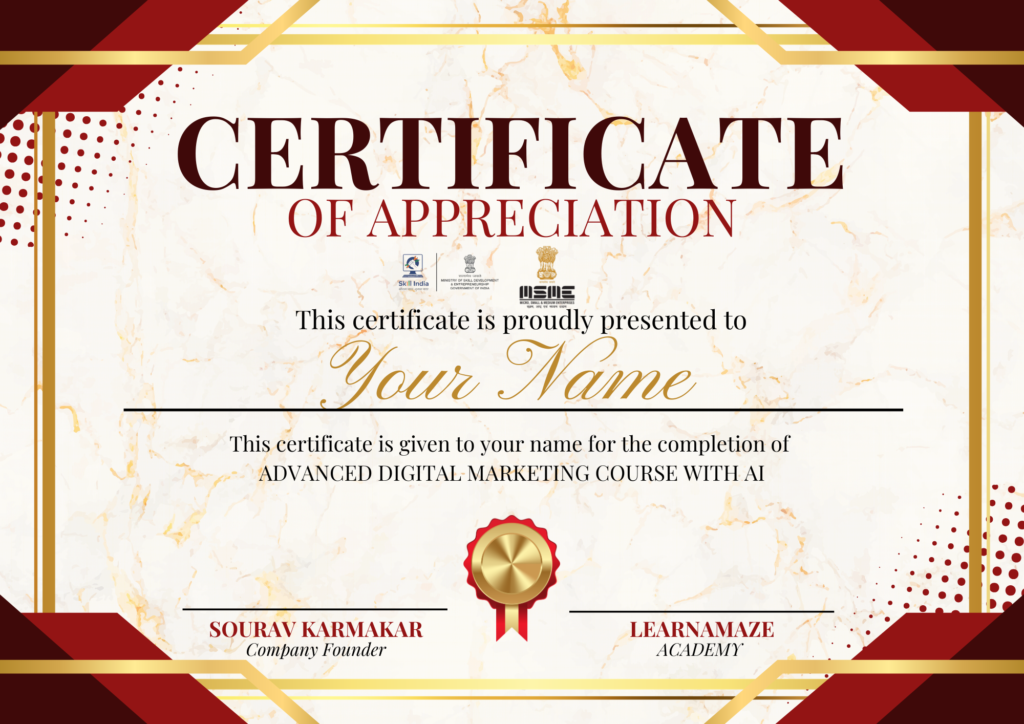
Do I need a laptop to do the course?
Will I get practical training or just theory?
How long does it take to complete the course?
It depends on which course you get enrolled as we have various courses with different time completion
our kolkata Branch
Call us directly?
Adress
Our Pune Center
Call us directly?
Adress
Essential Pages
Check Out Our Digital Marketing Online Course According To Your City :
Mumbai | Delhi | Bangalore | Ahmedabad | Chennai | Kolkata | Surat | Pune | Hyderabad | Jaipur | Lucknow | Kanpur | Nagpur | Indore | Thane | Bhopal | Visakhapatnam | Pimpri Chinchwad | Patna | Vadodara | Ghaziabad | Ludhiana | Agra | Nashik | Ranchi | Faridabad | Meerut | Rajkot | Kalyan | Dombivli | Vasai | Virar | Varanasi | Srinagar | Aurangabad | Dhanbad | Gurgaon | Amritsar | Navi Mumbai | Allahabad | Howrah | Gwalior | Solapur | Panvel | Mira Road | Ahmednagar | Amravati | Kolhapur | Jodhpur | Udaipur